Great Things to Do Near Casa Dobrila
Cape Kamenjak
Cape Kamenjak is a wonderful nature park located on the Premantura peninsula on the southern tip of Istria. With an unusual landscape, miles of rugged coastline and beaches to enjoy, coves and caves to explore, and a quirky ‘safari bar' it is a great day out for adults and children alike.
Scenic Drive
South east of Pazin, take a drive on road number 64, specifically the stretch between the villages of Gracišce and Pican. From these two vantage points, absorb the unique panorama of the valley from which Mount Ucka, the highest peak in Istria, rises (to 1,396 metres).
Visit the Matoševic winery
Just a couple of miles from Sveti Lovrec, the Matoševic winery is one of Croatia's leading winemakers and well worth a visit. Run by the charming Ivica, this winery produces wines that appear on the wine list at Heston Blumenthal's world famous Fat Duck restaurant.
Take a Coffee!
Café bars are everywhere in Croatia and without exception serve excellent coffee, always in the correct cup for the drink ordered. Taking a coffee is part of Istrian and Croatian identity, it marks the beginning of the day, nurtures friendship and business relationships and should you be invited for a coffee it may not necessarily mean actually drinking coffee, it’s more a euphemism for a chat over a drink of any kind!
Fresh Asparagus
Asparagus (šparuge) grows wild throughout Istria and is ready for picking in the spring. You will see stalls at the roadside offering bundles of freshly collected examples, selling for just a few euros. The locals braise the tops in olive oil until tender and then add eggs, salt and pepper. The result? Delicious scrambled eggs (fritaja).
Indulge Yourself in Rovinj
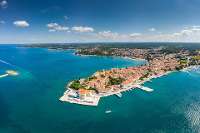
The spacious quaysides here are the perfect venue to sit and unwind at one of the many terraced ice cream parlours or café/bars. Sip a cappucino and do some people-watching!
Go diving!
Crystal clear waters, underwater plant life, rock formations and sea life are all irresistible reasons to discover the ocean. Off the coast of Rovinj, explore the sunken shipwreck Baron Gautsch, said to be one of the 50 most beautiful diving sites in the world!
Pula
The capital city, Pula is set in the valley of seven hills and offers fabulous Adriatic views. It is a delight to walk around with narrow cobbled streets, magnificent Roman buildings and the Pula Arena, an enormous, spectacular amphitheatre, built to host 20,000 spectators - it is the only remaining Roman amphitheatre in the world with a complete circle wall.
Views and Frescoes in Grimalda and Draguc
Head up into the hills and visit the hamlets of Grimalda and Draguc. Here you will be rewarded with magnificent views to the west over Lake Butoniga, to the north towards Buzet and the foothills beyond of Slovenia's Julian Alps or to the east over the Ucka Mountains.
Whilst in Draguc, visit the church of St Roch. Here, in addition to its view, wonder at its beautiful frescoes which cover nearly the entire interior, created by one master Anthony of Padova. Not to be mistaken with the well known Italian town, Padova is in fact the old name for the little town of Kascerga, near Motovun.
Istria’s largest and best-preserved frescoes, dating from the fifteenth century, are found in the church of sv Marije (St Mary) at Škrijinah, near Beram, just to the north west of Pazin. This is a breathtaking display which covers both ceiling and walls!
Explore Rijeka
In Rijeka, take a stroll down Korzo, the main pedestrian street. Wonder at the grand secessionist and art nouveau architecture which betrays the Austro-Hungarian heyday of the port, Croatia's third largest city.
Workaday Rijeka is at its no-nonsense best beside the port: maybe a little scruffy but full of character. Stock up for a picnic in the art nouveau market and purchase cheeses, unusual pastries and a great variety of breads or go for a bargain-priced snack in one of the workers' bars amongst the tangle of streets behind.
Get Your Kicks... On Route 66!
For a beautiful scenic drive, take the road no. 66 north east which hugs the coastline of the Kvarner Riviera. Start from Barban, passing through Raša, Labin, Plomin, Mošcenicka Draga, Lovran, Opatija and round to Rijeka. Any of these places would make a good stop for a drink or a meal. Return to your house taking the inland route via the Ucka Tunnel (toll payable). You will need to allow at least half a day for this.
Cycling and walking along the Parenzana
The Parenzana is a narrow gauge railway which ran from Trieste to Porec. Opened in 1902, its track covered a distance of 123km. Daily, the small train would follow the route carrying passengers and a cargo of, variously, salt from the salt pans of today’s Slovenian coast, olive oil from Motovun, Buje and the surrounding area, Istrian stone and other items such as wine, fruit and vegetables. It sadly closed in 1935 but remained affectionately in the hearts of the Istrian people. So much so that parts of it have reopened as a cycling and hiking track and a small motorised passenger train now runs along its route, a great way to see parts of northern Istria’s spectacular landscapes.
Hum - The Smallest Town In The World...?
Head east towards the Učka Mountains to the town of Hum, a fine example of a small medieval town situated on a ridge dominating the surrounding landscape. It has town walls and gate, a loggia and a parish church. Legend suggests that some building materials were left over after a project of town building in the Mirna Valley, enough to create a miniature town, hence Hum was born.
Funtana and Fažana
Visit Funtana, a coastal village between Vrsar and Porec. The Istrian coast is said to be the most indented here offering numerous coves, inlets, beaches and pine and oak groves. A number of fresh water springs or fountains, hence the derivation of the name Funtana, and this has secured the prosperity of the village over the centuries.
Fazana is a colourful town, its quayside backed with pastel-coloured Italianate buildings and many waterfront cafes, bars and restaurants. If you stop for a snack you must try pilchards, emblematic of the town. Try them cold in a marinade of oil, vinegar, water, parsley, rosemary and pepper – the Istrian way!
Music and Art in Groznjan
Head north to the medieval hilltop town of Groznjan. Since 1969 the town has been the International Cultural Centre of Musical Youth. Strolling around Groznjan at any time of year, you're certain to hear the echo of music being practiced or performed whilst from the beginning of June through to the end of September there are many evening jazz and classical concerts.
It affords wonderful views out to sea or inland towards the Ucka Mountains, or north to the Julian Alps. The village was abandoned after World War II but 20 years later, it was re-established by a number of artists and craftsmen who exhibit their work in their studios and shops. Pictures, drawings, pottery, ceramics, hand made jewellery and other crafts are displayed in abundance.
The tallest lighthouse on the Adriatic
Pay a visit to Savudrija on the far north west coast of Istria. Here you will see the tallest lighthouse on the Adriatic. Built in 1818, it has been beautifully preserved and is still operating. The locals also maintain an old tradition of keeping their fishing boats hung on wooden constructions on the beach.
Visit Porec
This charming coastal town has plenty to offer for a morning stroll or even a whole day full of sightseeing and exploration. Have a coffee or lunch at one of the elegant cafes, bars or restaurants lining the seafront and drink in the glorious view of the blue Adriatic sea, and gazing out towards the island of Sveti Nikola. Whilst in Porec, visit the open air market on the edge of the town and pick up some local produce for your dinner back at the villa by the pool.
Have a beach day
You are spoilt for choice when it comes to beaches. The Istrian coastline boasts a huge range of beaches from the top, close to the Slovenia border to the bottom near Pula and then all round the coast from Pula to Rijeka. Many have Blue Flag status, most are rocky and pebbly, a few are sandy. There are a lot to choose from around Rovinj and Porec – head for Zlatni Rat Beach, Lone Bay Beach, Materada Beach.
Go To Hell!
More politely, visit Pazin Castle, a 16th century structure standing on the remains of its 10th century predecessor. It overhangs a gorge into which the river Pazincica disappears, supposedly the inspiration for Dante’s description of the Gateway to Hell in his Inferno as well as a major scene from Jules Verne’s 1885 novel Mathias Sandorf.
The Batanas of Rovinj
The spacious quaysides in Rovinj are the perfect venue to sit and unwind at one of the many terraced ice cream parlours or cafeterias. Sip a cappuccino and do some people-watching! Often street artists such as choirs, bands, jugglers etc can be seen here, usually performing close to the fountain. Whilst in Rovinj, look for the batanas, traditional flat-bottomed, square-sterned, brightly painted wooden boats which have been used for centuries by the local fishermen.